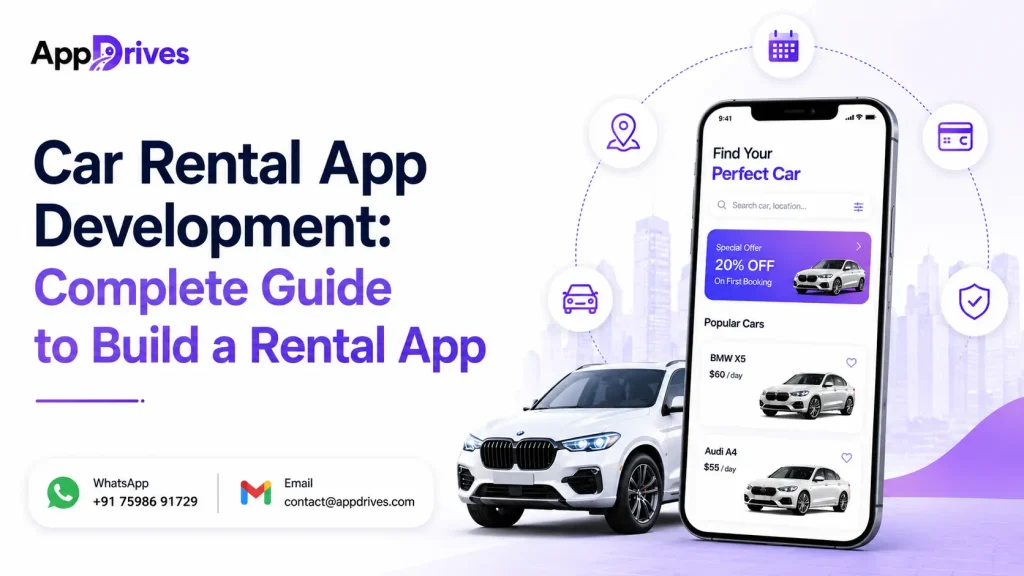
In today’s world, people do not want to waste time waiting for anything.
If they want to rent a car, they avoid waiting in lines.
Rather, they rent that car within seconds through their smartphones.
All they need to do is click once on their screens.
Yes, you heard it right: with a car rental app, this is possible. It gives customers a fast and simple way to rent a vehicle anytime.
Businesses that build a rental car app benefits bigger. An app reduces manual work and increases fleet management and bookings. This is why companies now want a car rental application.
According to the Global Market Insights, the car rental market is projected to grow at a CAGR of 6.5% by 2035. This active growth indicates that car rental software development is a long-term growth business. This makes it a good time to invest in a rental platform.
In this guide, you will come to know how a car rental app works, the different car rental app business models, features, car rental app development process, and challenges.
What is Car Rental App Development?
Car rental application development refers to the process through which the creation of mobile applications and web-based applications for the renting of vehicles takes place. The car booking applications enable users to search for vehicles, book them, travel in them, and pay for them online. This car rental booking app platform improves customer service as it is a convenient platform for many travelers.
There have been great changes within the rental industry over the last few years. Booking on a manual basis is very rare, and most businesses are opting to go digital to manage their operations. Customers can submit all sorts of documents, make payments, and get booking information through the mobile application. Business owners can also track their vehicles and manage booking prices from a single dashboard.
This approach saves time for everyone. It also creates a better rental experience.
How Can Rental Booking Apps Work
A car rental application follows a simple process. Every step in the application is designed to make renting a vehicle easy. Customers can complete their journey in just one click.
Here is how the process usually works.
Account Creation:
Account creation is the initial step. An email address, phone number, or social login is used to create an account. The platform then verifies the user’s identity and driving license. This step improves security and helps prevent fraud. After verification, customers can access all rental services.
Vehicle Selection:
Based on needs, users search for available vehicles. They select cars by price, location, seating capacity, or transmission. Each vehicle has clear photos, rental prices, specifications, and customer reviews. This helps users to compare options before making a decision.
Reservation Workflow:
Customers choose a vehicle and select the pickup and return dates. They can also add insurance or extra services if needed. The app shows the final rental price before payment. The booking is confirmed after payment is processed. The customer receives a notification and a receipt.
Rental Fulfillment:
The customers pick up their car from the respective place. A few companies even provide doorstep delivery service. The mobile application will have the pickup information along with customer support and other details about the rentals.
Trip Completion:
Once the time duration of the rent expires, the customers have to drop off the car. After that, the company does the check-up of the car and completes the transaction. In case the customers require extra hours to complete their task, then the application will process it and the extra cost will be added to the total cost.
Types of Car Rental Apps
Not every rental business follows the same model. Each one serves different markets and customer requirements. Choosing the right one helps you control the costs and reach the right audience.
Self Drive Rental Apps:
Self-drive car rental apps allow customers to rent a vehicle and drive it by themselves. Users need to choose the vehicle, book online, and return it after the mentioned time period. This model is popular among business travelers, tourists, and families. It works well for companies that own and manage their own fleet.
Peer to Peer Car Sharing Apps:
Peer-to-peer technology brings together car owners and customers who rent cars from them. Owners post information about their cars using the application. Customers use the website to view information and book cars. The company makes money through commissions earned from every successful booking transaction.
Chauffeur Rental Apps:
Chauffeur car applications provide users with cars and professional chauffeurs. These applications are used to hire cars for purposes such as airport pickup and drop-off, business conferences, wedding ceremonies, and other special occasions.
Marketplace Rental Apps:
Marketplace platforms bring many rental providers together. Customers compare prices, vehicles, ratings, and locations before booking. This gives them more choices in one place. Businesses benefit from a larger customer base and higher booking volumes.
Business Model Comparison:
The table below delivers the comparison on various business models with respect to investment and revenue. This helps businesses to choose the right model for app development.
| Business Model | Best For | Investment | Main Revenue |
| Self-Drive | Fleet owners | Medium | Rental charges |
| Peer-to-Peer | Marketplace startups | Medium | Booking commission |
| Chauffeur | Premium transport | Medium | Service charges |
| Marketplace | Large rental platforms | High | Commissions and subscriptions |
Benefits of Building a Car Rental App
The car rental application is not just an application for making bookings; it provides the organization with an opportunity to increase its efficiency in meeting customer demands, grow fast, and be efficient.
Expand Market Reach:
A vehicle-mobility app enables users to rent cars from any location. Office hours or local customers are no longer a limitation for your business. People can book a vehicle even before they arrive at their destination. This helps boost bookings all year round.
Streamline Operations:
Manual work slows down businesses. A booking app manages bookings, payments, customer details, and fleets digitally. Employees will be able to spend more time dealing with customer service and less time filling forms. This is an excellent way to become more efficient.
Improve Customer Satisfaction:
Customers opt for a quick and easy booking system. A great app enables them to search, compare and reserve a vehicle in minutes. Faster updates and safe transactions also promote customer trust. Further, happy customers will come back for future rentals.
Increase Profitability:
With improved fleet management software, there will be fewer idle vehicles. Businesses can also offer premium services and insurance plans, along with seasonal pricing. Automation reduces operating expenses and enhances profitability.
Support Business Growth:
Your scalable app will expand as your business expands. Additional vehicles, new cities, and additional services can be added to the platform without the need to rebuild. This will allow for easier future expansion.
Essential Car Rental App Features
A car rental booking should be easy for everyone to use. Customers opt for a smooth booking process. On the other hand, vehicle owners need simple management tools. Admins need full control of the platform. The right features improve user experience and help the business grow. They also reduce the manual work and increase customer satisfaction.
Customer App Features:
The customer app is the face of your business. It should make every step simple, from signing up to returning the vehicle.
User Registration:
Users can easily begin the process of signing up. They can sign up using an email address, phone number or social account. The feature should check the user’s identity and driving license. This enhances security and boosts trust.
Vehicle Search:
The process of looking for a vehicle must not take more time than expected. Customers can browse for vehicles based on city, pick-up location, cost, vehicle type, and number of seats. Filters are used to save time during booking.
Real-Time Booking:
With real-time booking, only the available cars will appear. The customers choose their dates of renting and then confirm their booking. Once confirmed, they will get a confirmation message.
Secure Payments:
A secure payment process is important for every rental app. The app should support credit cards, debit cards, UPI, digital wallets, and online banking. Payment encryption ensures that customer data is secure.
Booking Management:
Customers should manage bookings without contacting support. They can extend rental dates, cancel bookings, and download invoices from one dashboard.
Vehicle Owner Features
Vehicle owners need simple tools to manage their business. A well-designed dashboard saves time and improves vehicle utilization.
Vehicle Listings:
It is easy for vehicle owners to list additional cars. Photos, specifications, price, and booking terms and conditions can all be added by the owners. Listing cars will definitely attract many people.
Booking Requests:
All the bookings appeared on the owner dashboard. Owners can approve or reject requests based on vehicle availability. Business owners are informed by instant notification.
Availability Calendar:
With the availability calendar, owners can update schedules, block dates, and manage the rentals throughout the year. This keeps bookings organized.
Earnings Dashboard:
Owners should always know how much they can earn. The dashboard shows complete details on rentals, pending payments, and monthly income. Clear reports for a business help in better decision-making.
Document Verification:
The document verification feature is important in the car rental booking application. Before listing the vehicle, the business owner must completely check the insurance papers, registration certificates, and ownership documents to improve trust.
Admin Panel Features
The admin panel controls the complete platform. It helps businesses manage users, vehicles, bookings, and payments from one place.
User Management:
Admins can monitor customer and owner accounts. They approve registrations, handle complaints, suspend accounts, and manage permissions. This keeps the platform safe.
Fleet Management:
Fleet management feature is used to track every vehicle. Admins can monitor the availability, maintenance schedules, service history, and inspections. These tools improve fleet performance.
Booking Management
This feature keeps every booking organized. Admins can view active bookings, handle cancellations, and resolve customer issues quickly.
Pricing Management:
Rental prices often change based on demand. Here, admins can update the rates and change them based on weekends, promotions, and other. Flexible pricing helps to increase revenue.
Analytics Dashboard:
Business data supports better decision-making. The analytics dashboard shows bookings, revenue, customer activity, vehicle usage, and business growth. These insights help to improve future planning.
AI-Powered Features
Artificial intelligence helps rental businesses work smarter. It improves customer service, reduces manual work, and supports better business decisions.
Personalized Recommendations:
AI examines customer behavior and booking history. It recommends vehicles to match customer preferences. Better suggestions often lead to more bookings.
Dynamic Pricing:
Rental demand changes every day. AI adjusts prices on demand, season, location, and availability. This helps the businesses to earn more without manual updates.
AI Chatbot:
Customers often need instant answers. AI chatbots work 24/7. It answers all questions, helps with booking, and solves simple issues quickly.
Fraud Detection:
The serious cause of financial losses is fraud detection. AI detects unusual activity, fake accounts, and suspicious payments. Early detection protects both the businesses and customers.
Predictive Analytics:
AI also helps businesses to plan. It predicts customer demand, vehicle usage, and maintenance needs. These insights enhance the business planning and reduce the operating costs.
Car Rental Software Development Process
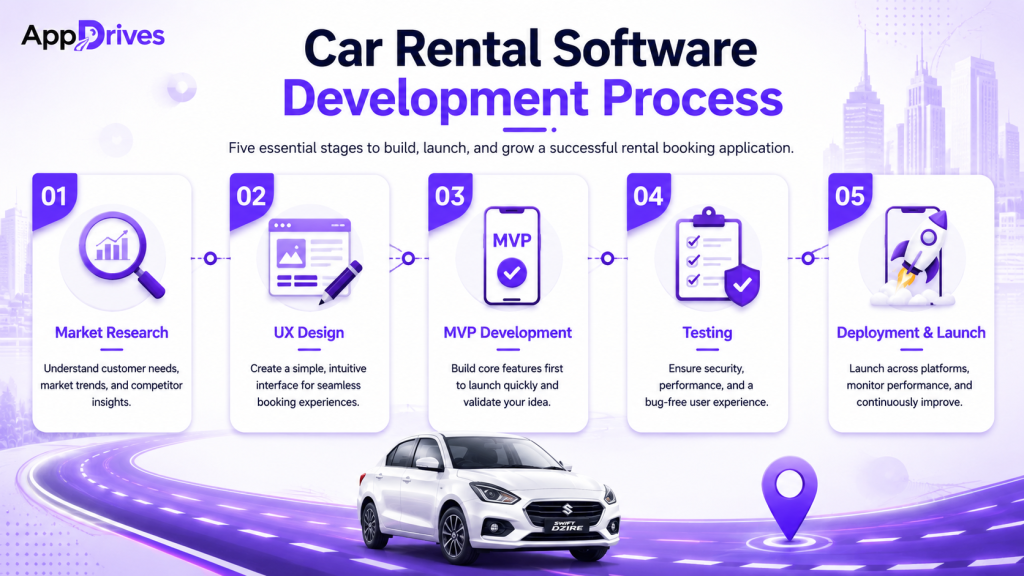
Building a successful rental app takes careful planning. A clear car rental software development process helps to reduce mistakes and improves the final product.
Market Research:
Every successful project starts with research. First, we examine your competitors, audience, and market trends. Then we understand the customer needs before development starts. Good research helps you to build the right product with the right features.
UX Design:
An intuitive design keeps users engaged. Our developers create a clear screen with simple navigation and an easy booking flow. Customers should complete every task without confusion. A better design often leads to more bookings.
MVP Development:
If you are a startup, initially we suggest you start with a minimum viable product. Include only the most important features. This helps you to launch quickly and improve the app using feedback.
Testing:
Testing helps to find problems and fix them before launch. Check the app on different devices and operating systems. Test security, performance, speed, and usability. We fix every issue before releasing the product.
Deployment & Launch:
After testing, we launch your app on Android, iOS, and the web. Monitor user feedback and app performance. Release updates regularly to enhance security and add new features.
How Much Does It Cost to Build a Car Rental App?
Cost involved in developing the car rental app is influenced by many things. The important criteria are features, design, platforms, integration, and approach to development. A basic car rental app development cost generally involves less money than a customized app. The amount lies between $3,500 and $100,000. It varies according to the approach chosen for development, be it white label, clone or customized. The time period for development also varies based on the development approach.
Car Rental App Monetization Models
A successful car rental app should integrate different monetization models and generate income from all sources. Multiple revenue streams surge the profits and reduce risk related to the business.
Booking Commissions:
Marketplace apps earn a commission for every successful booking. This model creates steady revenue without owning every vehicle listed on the platform.
Subscription Plans:
Subscription plans usually offer extra benefits. Customers receive discounts, priority bookings, or exclusive vehicles. Monthly and yearly memberships create recurring revenue.
Dynamic Pricing:
Prices are not the same throughout the year. Higher prices during peak seasons help to increase profits. Lower prices during slow periods attract more bookings.
Premium Services:
Premium services or some extra services increase the average booking value. Businesses can offer doorstep delivery, luxury cars, child seats, WiFi, roadside assistance, or express pickup for an additional fee.
Insurance Add-ons:
Many customers want extra protection for a safe drive. Insurance plans cover accidents, theft, and vehicle damage. They also create another reliable source of income for the business.
Common Challenges in Car Rental App Development
Building a rental app is just an initial step. Running it smoothly is the real challenge. Businesses must solve both technical and operational issues. Planning for these problems early helps you to avoid delays and improve customer trust.
Vehicle Availability:
Keeping vehicle data updated is important. Customers see only the available cars. If the same car is booked by two customers, it creates confusion and impacts brand trust. Integrating a real-time booking system solves this problem. It updates vehicle availability after every confirmed booking.
Data Security:
A rental app stores both personal and payment details. Customers trust your platform with sensitive information. It is your responsibility to protect the data at every stage. For this, we use strong encryption, secure logins, and trusted payment gateways. Regular security updates reduce cyber risks.
Fraud Prevention:
In the rental industry, fraud prevention is a common challenge. Fake accounts and false documentation can lead to financial losses. Identity verification, document checks, and AI-powered fraud detection help to stop suspicious activity before it causes damage.
Regulatory Compliance:
Every country has different rental laws. Your business must follow local rules for licenses, insurance, taxes, and customer data. Meeting these legal requirements protects your business and builds customer confidence.
Infrastructure Scaling:
Your platform should grow with your business. More customers mean a rise in bookings and data. A weak system may slow down or crash during busy periods. Cloud hosting and scalable architecture keep your app fast and reliable as your business expands.
Why Choose AppDrives for Car Rental App Development?
Choosing the right car rental app development company can make a big difference. All you need is a team to understand both the rental industry and technology. Here is where we are: AppDrives helps businesses to build a secure, scalable, and feature-rich car rental application. Our team mainly focuses on user experience, performance, and long-term growth. If you have an idea to build a self-drive platform, chauffeur booking app, or a peer-to-peer marketplace, we are here to build a solution that fits your goals.
Our experts handle every stage of development; this includes planning, UI/UX design, development, testing, deployment, and support. Our apps include modern features such as AI recommendations, dynamic pricing, GPS tracking, secure payment gateways, cloud hosting, and advanced analytics.
Ready to grow your rental business? Contact Appdrives today and build a powerful car rental app designed for long-term success.
Frequently Asked Questions
Q1. What is car rental app development?
Car rental app development is the process of building a mobile or web application for vehicle rentals. Customers can search for cars, book online, make payments and manage rentals from one platform.
Q2. How do car rental apps work?
Customers create an account, choose the vehicle they want, select dates, and complete the payment. They collect the vehicle on the date, use it for the preferred period, and return it.
Q3. How much does it cost to build a car rental app?
The car rental app development cost depends on the features, design, integrations, and customization. The cost for the development ranges from $3,500 to $100,000 or more.
Q4. How long does it take to develop a car rental app?
A simple model with basic features can take 1-2 months, whereas a custom platform with advanced features takes 4 to 9 months.
Q5. What are the essential features of a car rental app?
Important features include user registration, vehicle search, live booking, secure payments, booking management, fleet management, analytics, GPS tracking, and AI-powered recommendations.
Q6. Which type of car rental app is best for my business?
The right model depends on your business goals. Self-drive apps suit fleet owners. Peer-to-peer platforms work well for marketplaces. Chauffeur apps are ideal for premium transport services.
Q7. How do car rental apps make money?
Car rental apps earn revenue via booking commissions, rental charges, subscription plans, premium services, insurance add-ons, and dynamic pricing.
Q8. Can I build a car rental app without coding?
Yes, using no-code tools, you can build and launch quickly. However, custom development gives you more control and better branding.
Q9. Do I need a license to launch a car rental app business?
Yes, most countries require business registration, insurance, tax compliance, and other legal approvals before you begin operations.
Q10. Should I choose a custom solution or a white-label solution?
A white-label solution is a good choice if you want a fast launch with a lower budget. A custom solution is better if you need unique features, stronger branding, and long-term flexibility.